Blog

All Car Care & Buying Tips
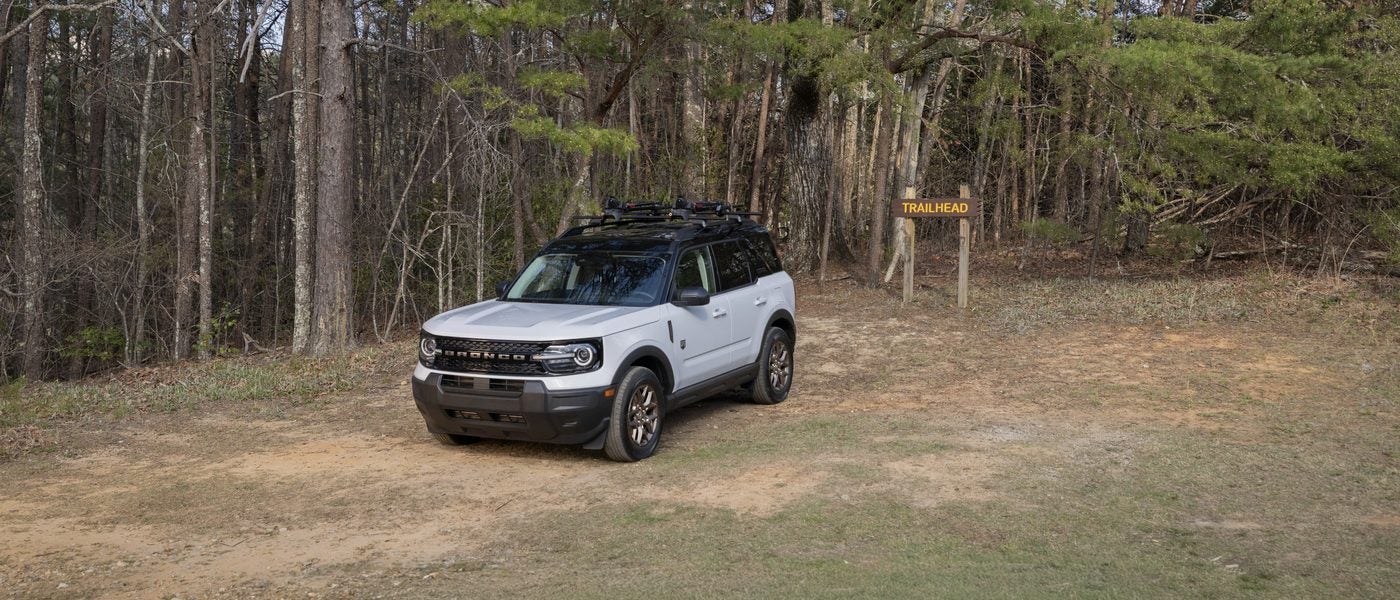
2026 Ford Bronco Sport Big Bend parked in the woods with bikes on the roof
in Car Care & Buying Tips

4x4 vs. AWD for Michigan Winters: Bronco, Explorer & More

Around Freeland, the question comes up every fall: do I need 4x4, or is all-wheel drive enough? For most Mid-Michigan winter driving, either one does the job. What matters is how each one works and what tires are on it. Here's the plain-English difference, then what Ford actually puts in the four models people ask us about most. AWD vs. 4x4 in plain English All-wheel drive (AWD) is always on. The system sends power to the wheels that need it, and you never touch a button. Part-time 4x4 is something you switch on. It usually has a low range (4L) for deep snow, mud or steep trails. Don't leave it in 4x4 on dry pavement, because the driveline binds up. Automatic 4x4 (often marked 4A) switches between two-wheel and four-wheel drive on its own as conditions change. Ford names these systems its own way. Bronco Sport has "4x4," Explorer has "Intelligent 4WD," and Maverick has AWD or "Advanced 4WD." Apart from the Bronco's standard part-time 4x4, each of these systems works on its own, like AWD. What neither one does: stop or steer AWD and 4x4 help you get moving in snow. They don't help you stop or turn on snow and ice. Consumer Reports, Michelin and Bridgestone all make that point. That's why tires matter more than the drive system. For when to switch, see winter tires vs. all-season in Mid-Michigan; Quick Lane in Freeland sells and installs them for all makes. Ford Bronco: true part-time 4x4, with an automatic option Every Bronco has 4x4. Base models use a part-time system you shift on the fly between 2H, 4H and 4L. Upper models such as Badlands step up to an advanced 4x4 with automatic on-demand engagement, which adds a 4A setting that handles changing roads by itself. Every Bronco's G.O.A.T. Modes include Slippery, which Ford says adjusts for rain, snow and ice. See our Bronco review. Ford Bronco Sport: 4x4 on every model Every Bronco Sport comes with 4x4 that works automatically. When it senses wheel slip, it shifts power on its own. The Badlands, and the Outer Banks with the Sasquatch package, get an advanced 4x4 with a twin-clutch rear drive unit that can send more power to one rear wheel. Slippery is among its G.O.A.T. Modes, and ground clearance is up to 8.8 inches with available all-terrain tires. See our Bronco Sport review or Bronco vs. Bronco Sport. Ford Explorer: rear-drive standard, 4WD available The 2027 Explorer is rear-wheel drive as standard on most models. Active, ST-Line, Platinum and ST can be ordered with Intelligent 4WD, and the Explorer Tremor has it as standard. If you drive Mid-Michigan back roads all winter, the 4WD option is worth asking about. See our Explorer review. Ford Maverick: front-drive hybrid, AWD available The Maverick hybrid comes with front-wheel drive, and AWD is available. The Lobo and Tremor use Advanced 4WD with a twin-clutch rear drive unit. If you're shopping used, note that Maverick hybrid AWD only arrived for 2025. See our Maverick review. So which one do you need? Mostly paved roads and highways: AWD or automatic 4x4 plus winter tires is plenty. Unplowed roads, deep snow, a long driveway or a trailer to the lake: a true 4x4 with low range, like the Bronco, earns its keep. On a budget: a front-drive vehicle on good winter tires gets around a Michigan winter fine for most commutes. Come drive them back to back in Freeland. Browse new Fords, or call (989) 695-5566. Frequently asked questions Is AWD or 4x4 better in snow? For everyday driving on plowed roads, AWD or an automatic 4x4 works just as well. A part-time 4x4 with low range is better for deep snow and unplowed roads. Neither helps you stop, so winter tires matter most. Is the Ford Bronco Sport AWD or 4x4? Ford calls it 4x4, and it's standard on every Bronco Sport. It works automatically, shifting power when it senses wheel slip. Badlands adds an advanced 4x4 with a twin-clutch rear drive unit. Can I drive in 4x4 on dry roads? Not with a part-time 4x4 like the Bronco's standard system. On dry pavement the driveline binds. AWD and automatic 4A settings are made to run on any surface. Is the Ford Explorer all-wheel drive? Rear-wheel drive is standard on most 2027 Explorers. Intelligent 4WD is available on Active, ST-Line, Platinum and ST, and standard on Tremor.

Read More
Smiling driver sitting in a red car at a dealership

Trade In or Sell It Yourself? Michigan's Trade-In Tax Credit

Selling your car yourself can bring more money than a trade-in. But in Michigan, a trade-in comes with a tax break a private sale doesn't: you pay sales tax only on the difference, up to a yearly limit. For 2026, up to $12,000 of your trade-in's value comes off before tax. Here's how the credit works, what changes next year, and how to tell which way leaves more money in your pocket. How the trade-in tax credit works Michigan's sales tax on a vehicle is 6%. When you trade in a vehicle at a licensed dealer as part of buying another one, the agreed value of your trade-in comes off the price before the tax is figured, up to a yearly cap. For 2026 the cap is $12,000. At 6%, a trade-in worth $12,000 or more cuts your sales tax by as much as $720 (6% of $12,000). A smaller trade-in cuts it by 6% of its value. The cap has gone up $1,000 a year since 2019. Michigan Treasury's bulletin RAB 2026-11, approved October 27, 2026, lists the next steps: Purchase date Most trade-in value that comes off before tax 2026 $12,000 2027 (per RAB 2026-11) $13,000 2028 (per RAB 2026-11) $14,000 2029 and later (per RAB 2026-11) No limit Figures checked November 13, 2026. Tax law can change, so we show the exact tax lines on your paperwork. This is general information, not tax advice. Ask a tax professional about your situation. The fine print It has to be a dealer sale. The credit applies only when you buy from a licensed dealer. One trade-in per purchase. Trading two vehicles on one deal doesn't double the credit. The value must be on the paperwork. The trade-in's agreed value has to be listed on the bill of sale. Not for leases. Michigan Treasury says the credit does not apply to leases or rentals. What changes when you sell it yourself Sell privately and there's no trade-in credit on your next purchase. You'll pay the 6% on the full price of the vehicle you buy. Your buyer pays Michigan's 6% use tax when they title the car at the Secretary of State. You also take on the work: pricing it, listing it, answering calls, meeting strangers for test drives, checking that the payment is good, and handling the title transfer. At a dealership, the dealer handles the title paperwork and collects the tax, so you don't need a Secretary of State visit. A quick way to decide Get your trade-in value. Our trade-in value tool takes a few minutes. Look up what similar vehicles sell for privately near you. Add the tax you'd save by trading, which is 6% of the trade value, up to the cap. Compare. If the private-sale price doesn't beat the trade value plus the tax savings by enough to cover your time and hassle, trading in usually wins. The closer your vehicle's value is to the cap, the bigger the tax savings. Remember, the savings only count if you're buying your next vehicle from a dealer. Selling without buying? We'll still buy it You don't have to buy from us to sell to us. McDonald Ford will buy your car, truck or SUV even if you don't buy one of ours. See how it works on our Sell Your Car page. (The tax credit only applies when you're also buying a vehicle from a dealer.) Trading toward something new? Browse new Fords and used vehicles in Freeland, MI, or call (989) 695-5566. Frequently asked questions What is Michigan's trade-in tax credit limit? $12,000 of trade-in value for 2026. Michigan Treasury's RAB 2026-11 (approved October 27, 2026) sets it at $13,000 for 2027 and $14,000 for 2028, with no limit from 2029. Do I get the trade-in tax credit if I sell my car privately? No. The credit applies only to a trade-in on a purchase from a licensed dealer. In a private sale, you pay tax on the full price of your next vehicle, and your buyer pays 6% use tax when titling. Can I use two trade-ins to get a bigger credit? No. Michigan Treasury says the credit is limited to the value of a single trade-in per purchase. Does the trade-in credit apply when I lease? No. Michigan Treasury says the trade-in exclusion does not apply to leases or rentals.
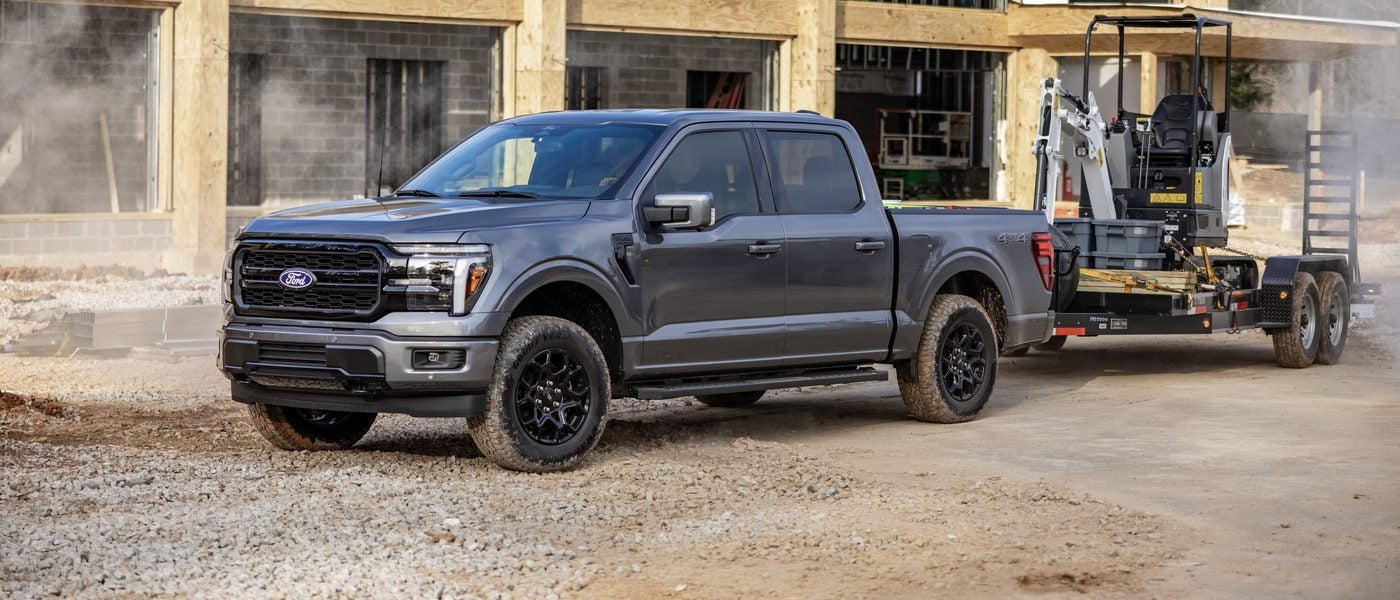
2026 Ford F-150 Lariat towing an equipment trailer

How Often Does a Ford EcoBoost Need an Oil Change?

Short answer: when your Ford tells you to, and never longer than one year or 10,000 miles, whichever comes first. That's straight from Ford's owner's manuals. There's no single mileage number for every EcoBoost, because Ford lets the truck or SUV work it out. Here's how that works, and why a Michigan winter can bring the next change sooner than you'd expect. Your Ford's Intelligent Oil-Life Monitor decides Most current Fords, including EcoBoost F-150s, Broncos, Explorers and Mavericks, have Ford's Intelligent Oil-Life Monitor. It works out when the oil is due from how you actually drive: engine temperatures, idling, towing and trip length. Ford's manuals say this means you don't have to follow a mileage-based schedule. Watch for two messages: "Change Engine Oil Soon" appears when about 5% oil life is left. "Oil Change Required" means 0% is left. Ford's manuals say to change the oil within two weeks or 500 miles of the message showing up. And no matter what the monitor says, never go past one year or 10,000 miles between changes. Why Michigan driving can shorten it Ford lists the kinds of driving that wear oil faster. Several describe a normal Michigan winter: short trips of under 5 to 10 miles temperatures well above or below normal a lot of idling, like warming up the truck or sitting in traffic dusty conditions, such as dirt roads heavy loads or towing You don't have to do the math. The monitor counts these and brings the next change sooner. Ford's own example shows a heavily idled vehicle told to change at 7 months and 4,000 miles. If your message pops up earlier than last time, that's usually why. If the monitor gets reset by mistake The monitor should only be reset right after an oil and filter change. If it gets reset early, or the display stops working, Ford's manuals say to fall back to every 6 months or 5,000 miles until it's sorted out. When we change your oil, we reset it for you. Check the oil level between changes Ford's F-150 and Bronco manuals say to check the engine oil level at every fill-up. Ford's support pages say at least monthly for most vehicles. Some oil use is normal, especially when an engine is new or works hard. If the level reaches the MIN mark, top it off and have it looked at. Not every EcoBoost takes the same oil This is the part people get wrong. In Ford's own manuals: The 2.7L and 3.5L EcoBoost in the F-150 and the 2.3L and 2.7L in the Bronco call for 5W-30. The 1.5L EcoBoost in recent Bronco Sports calls for 0W-20. Same family name, different oil. Your owner's manual lists the right grade and Ford spec for your engine. For the 5W-30 engines, Ford's F-150 and Bronco manuals list both Motorcraft synthetic blend and full synthetic. Quick Lane looks up the right oil for your exact vehicle. The Works at Quick Lane in Freeland Ask for The Works: a synthetic blend oil change (up to 6 qts. of Motorcraft oil) with a Motorcraft filter, plus a tire rotation and pressure check, brake inspection, vehicle checkup, battery test, fluid top-off, filter check, and belts and hoses check. See the service specials page for terms. If your engine calls for a different oil, ask us what fits. Quick Lane is open Saturdays and takes walk-ins. Schedule an oil change, or read more about Quick Lane in Freeland. Quick Lane services all makes and models, not just Fords. More oil tips are on our oil change advice page. Frequently asked questions How many miles between oil changes on a Ford EcoBoost? There's no fixed number. Ford's Intelligent Oil-Life Monitor sets the interval from how you drive, and Ford says never to exceed one year or 10,000 miles between changes. What does "Change Engine Oil Soon" mean on a Ford? It means about 5% oil life is left. Ford says to change the oil within two weeks or 500 miles of the message appearing. Do EcoBoost engines need full synthetic oil? Not always. For 5W-30 engines like the F-150's 2.7L and 3.5L EcoBoost, Ford's manuals list both Motorcraft synthetic blend and full synthetic. Other EcoBoosts, like the 1.5L, call for 0W-20. Check your owner's manual. Does cold weather mean I need oil changes more often? It can. Ford counts short trips, extreme temperatures and long idling as harder use, and the oil-life monitor brings the next change sooner when it sees them.

Car keys being handed over at a dealership

Ford Lease Ending? Turn In, Buy or Trade Early in Michigan

Your Ford Credit lease ends with three choices: give it back, buy it, or move into another Ford. This post walks through how each one works, what to do in the last four months, and two Michigan tax rules that surprise people. Still deciding whether to lease at all? Our leasing vs. buying guide covers that. This post is about the end of the lease. Your three choices at lease end 1. Turn it in. You can return it at any Ford dealer, not only the one where you leased it. If your contract has a disposition fee, it applies when you return the vehicle. You also pay for miles over your limit and for wear beyond normal use, as your lease agreement spells out. 2. Buy it. Your lease contract sets a purchase price. You pay that price plus taxes and fees, in cash or with a loan. One catch: Ford says some electric vehicles can't be bought at lease end, so check your contract. 3. Lease or buy another new Ford. Ford Credit says qualifying customers who lease or buy a new Ford or Lincoln may get the disposition fee waived. Ask us whether yours qualifies. A simple 4-month countdown About four months out: find your lease contract. Write down three numbers: your purchase price, your mileage allowance and the miles on the odometer today. Then check what your vehicle is worth. In the last 60 days: book Ford Credit's free pre-inspection. An inspector from Manheim comes to your home or work and looks the vehicle over, so wear charges aren't a surprise on turn-in day. The last couple of weeks: gather everything the vehicle came with. Ford's checklist names all keys and key fobs, floor mats, owner's manuals, dealer-installed accessories and, on an electric vehicle, the charging cord. Missing items can be charged as excess wear. Turn-in day: clean out your belongings, and bring the odometer reading and your paperwork. If you want a new Ford waiting when you hand in the keys, start shopping around the four-month mark too. See our lease pages for the F-150, Explorer, Bronco Sport and Bronco for any current Ford lease offers. Trading in your lease early You don't have to wait for the last month. Ford Credit lets you end a lease early under the Voluntary Early Termination section of your lease agreement. Whether that's smart comes down to two numbers: what it costs to end the lease today, and what the vehicle is worth today. We can look up both and show you side by side. If you're near or over your mileage limit, the comparison is worth doing sooner. If a non-Ford dealer offers to buy your leased Ford, ask first. Ford Credit restricts buyouts by third-party dealers, so the deal may not be allowed. Two Michigan tax rules to know Buying your leased car is taxed. Michigan charges 6% sales tax on the purchase price in your lease when you buy the vehicle at lease end. Plan for it if you're buying. The trade-in tax credit doesn't apply to leases. Michigan lets you subtract a trade-in's value before sales tax when you buy from a dealer. Michigan Treasury says that credit does not apply to leases or rentals. Tax rules change, and your deal is your own, so we'll show the tax lines on paper before you sign anything. Let us run the numbers Whether you leased from us or from another Ford dealer, we can handle the return, the purchase or your next Ford, here in Freeland on Midland Road (M-47). Call (989) 695-5566, send us a message, or browse new Fords. Frequently asked questions Can I return my Ford lease to any Ford dealer? Yes. Ford says you can work with any Ford dealer at lease end, not only the one where you leased. Is there a fee to turn in a Ford lease? If your lease has a disposition fee, it applies when you return the vehicle, plus any charges for extra miles or excess wear. Ford Credit says qualifying customers who lease or buy a new Ford or Lincoln may get the disposition fee waived. Do I pay sales tax if I buy out my lease in Michigan? Yes. Michigan charges 6% sales tax on the purchase price in your lease agreement when you buy the vehicle. Can I end my Ford lease early? Yes. Ford Credit lets you end a lease early under the Voluntary Early Termination section of your lease agreement. Ask us to compare the cost of ending it with what the vehicle is worth.

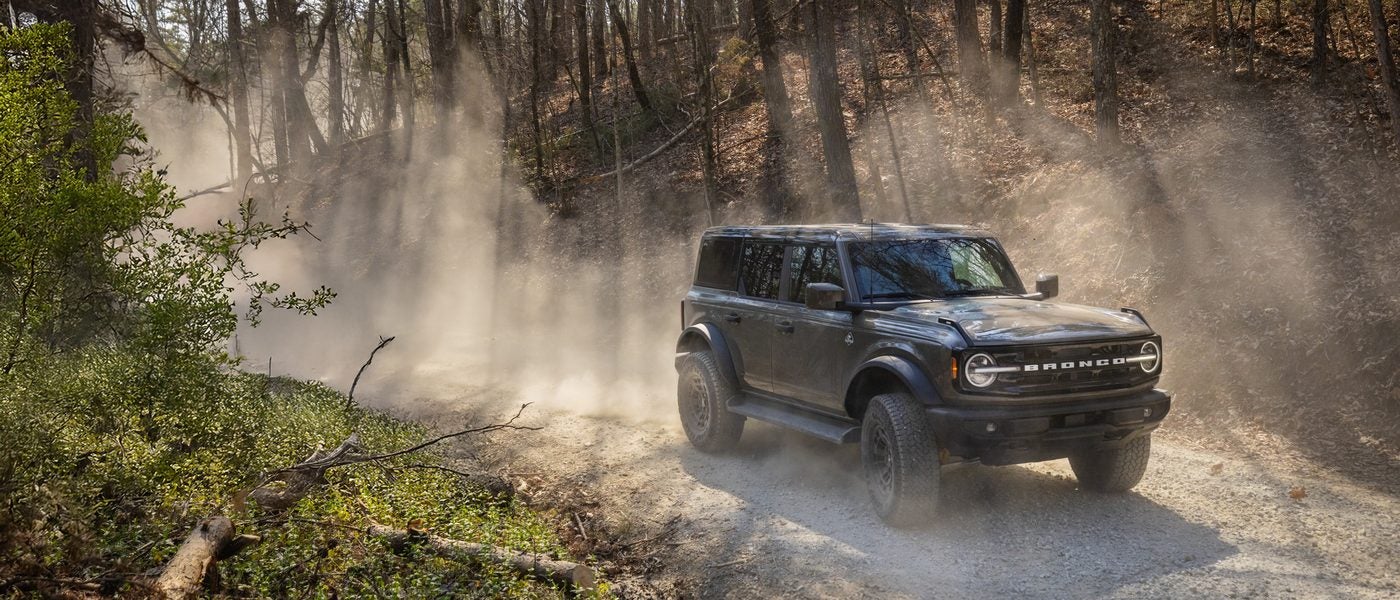
2026 Ford Bronco Outer Banks on a forest trail

Winter Tires vs. All-Season in Mid-Michigan: When to Switch

Snow isn't the signal to switch tires. Temperature is. Tire makers say all-season rubber starts to stiffen below about 45°F, and a winter tire grips better from that point on, even on dry roads. So when does Mid-Michigan hit 45°F? Here are the dates from NOAA's own records, plus how to pick the right tire and how much tread you need. When to put winter tires on (and take them off) around here NOAA's 1991-2020 climate normals for the Saginaw airport (MBS) put the average daily temperature below 45°F starting around November 1. It climbs back above 45°F around April 14. NOAA's station in Midland shows the same two dates. That gives a simple rule for the Tri-Cities: winter tires on by early November, off by mid-April. If a warm spell runs late, wait until temperatures stay above 45°F before swapping back. Winter tires wear faster and handle less precisely on warm, dry pavement. And yes, it snows. The Saginaw airport averages about 50 inches of snow a season, so the first slick morning usually comes before most people are ready. Winter, all-season or all-weather? Look at the sidewall for two markings: M+S (mud and snow): describes the tread pattern only. No snow test is required to print it. Three-peak mountain snowflake: the tire passed a standard traction test on medium-packed snow. Winter tires carry it. So do all-weather tires, which you can leave on all year. One limit to know: the snowflake test measures getting going in snow. It doesn't test stopping, turning or ice. A dedicated winter tire is still the best choice for ice and hard-packed snow. Put them on all four wheels Bridgestone and Tire Rack both warn against fitting winter tires on only the front or rear. With grip at one end only, the vehicle can slide or spin when you brake or turn. That's true for front-wheel drive, rear-wheel drive, AWD and 4x4 alike. How much tread is enough for snow? 2/32 inch is legally worn out in most states. That's the top of Lincoln's head on a penny. 4/32 inch is the top of Washington's head on a quarter. Start shopping here. 5/32 inch or more is what Bridgestone and Tire Rack say you want for snow. Below that, snow traction drops off. Check pressure too. Tires lose about 1 psi for every 10°F drop, so a fall cold snap can leave them low. Use the pressure on your door-jamb label, not the number on the sidewall. Studded tires? Not in Michigan Michigan law effectively bars studded tires for everyday drivers. The Michigan State Police note that no stud maker has met the state's pavement-wear standard. Michigan's exceptions in the vehicle code are narrow, such as police vehicles and ambulances. Chains are allowed when they're needed for safety. AWD or 4x4? You still want the right tires All-wheel drive and 4x4 help you get moving. They don't help you stop or turn. Consumer Reports and Michelin both make that point. A front-drive car on winter tires will often stop shorter than an AWD SUV on worn all-seasons. Get tires at Quick Lane in Freeland Quick Lane Tire & Auto Center at McDonald Ford sells and installs tires from major brands for all makes and models, backed by the Low Price Tire Guarantee. Quick Lane is open Saturdays and takes walk-ins. While your car is here, ask for an alignment check. New tires last longer when the alignment is right. Find tires for your vehicle, see current service specials, or schedule your visit. More on Quick Lane in Freeland. Frequently asked questions When should I put winter tires on in Mid-Michigan? By early November. NOAA's 1991-2020 normals for the Saginaw airport show the average daily temperature dropping below 45°F around November 1, which is when winter tires start to out-grip all-seasons. When should I take winter tires off? Around mid-April, once temperatures stay above 45°F. NOAA's normals put that crossing around April 14 in Saginaw and Midland. Winter tires wear faster on warm pavement. Are studded tires legal in Michigan? Not for everyday drivers. Michigan's vehicle code limits studs to narrow exceptions such as police vehicles and ambulances, and the Michigan State Police say no stud maker has met the state's pavement-wear standard. Do I need four winter tires or just two? Four. Tire makers warn that mixing winter tires on one axle with other tires on the other can make the vehicle slide or spin when you brake or turn.

Contact Us

Fill out this form below and we'll contact you shortly
*Required Fields